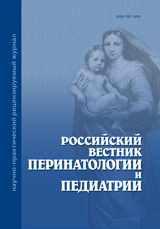
The journal "Russian Bulletin of Perinatology and Pediatrics" has been re-registered by the Federal Service for Supervision of Communications, Information Technology and Mass Communications (registration number: PI No. FS77-87655 dated June 25, 2024), the composition of the founders has changed.
The founders of the journal are:
- State Budgetary Healthcare Institution "Scientific and Practical Center for Specialized Medical Care for Children named after V.F. Voino-Yasenetsky" of the Moscow Department of Health;
- Limited Liability Company "National Pediatric Academy of Science and Innovation".
Included in the database Scopus, Ulrich’s Periodicals Directory, Google Scholar, EBSCO.
The journal "Rossiyskiy Vestnik Perinatologii i Pediatrii covers current directions in the diagnosis and treatment of childhood diseases in different fields of medicine:
- perinatology and neonatology;
- cardiovascular science;
- gastroenterology;
- nephrology and urology;
- pulmonology and allergology;
- psychoneurology
- pediatric surgery
- pediatric oncology, etc..
The journal Rossiyskiy Vestnik Perinatologii i Pediatrii is listed as periodicals recommended by the Higher Attestation Commission (HAC) and thus it meets all criteria for modern editions entered in this List:
- to publish manuscripts in the journal free-of-charge;
- to follow publication frequency (6 times a year);
- to give a full-text electronic version of the journal in the Russian Science Citation Index and to circulate it by subscription online at RU
Our journal publishes debatable and lecture articles, reviews of literature, and abstracts of papers published in foreign journals. Traditionally, it familiarizes its readers with the materials of scientific conferences, congresses, and other medical forums on the issues of perinatology and pediatrics. New columns and additional supplements for practitioners have been created.
The editorial staff of the journal welcomes collaboration with specialists in perinatology and pediatrics and all authors concerned.
The author indices of the papers published in the past years since 1999 are available at the site of the journal for the sake of our readers' convenience.
The journal subscription information is available at our site.
It is very important for the editorial staff of the journal to know our readers' opinions as to its publications and in this connection we are happy to respond to your proposals.
The journal welcomes collaboration with all specialists in perinatology and pediatrics and the representatives of pharmaceutical companies and advertisers to collaborate.
Abbreviated name of the journal: Ros Vest Perinatol i Pediatr
Editorial office address:
journal "Russian Bulletin of Perinatology and Pediatrics"
119620, Moscow, Aviatorov str., 38
PantelyushinaTV@zdrav.mos.ru
Tel. +7(495)735-08-64
Current issue
 Open Access
 Subscription or Fee Access
ANNIVERSARY
EDITORIAL
Diagnostics of rare diseases presents significant challenges for both physicians and developers of artificial intelligence systems. This is due to the genotypic and phenotypic polymorphism of fuzzy clinical manifestations. Previously created computer systems did not include or insufficiently analyzed visual images of patients. The use of neural network technologies in phenotype analysis for disease recognition does not explain the proposed solution and their application is impossible on small samples of rare diseases. At the same time, a delay in nosological identification of diseases leads to the appearance of irreversible pathological changes that could be prevented with the timely appointment of pathogenetic therapy, which has recently appeared for a number of hereditary diseases. A version of the construction of a diagnostic system for rare diseases is presented, including visual image rows, accompanied by an explanation understandable to the physician. The peculiarities of constructing an expert system for differential diagnosis of hereditary diseases, implemented for lysosomal storage diseases, are indicated. A quantitative comprehensive assessment of the symptoms used in the diagnostic intelligent system is implemented based on expert confidence factors. The integrated approach includes measures of confidence in modality (diagnostic significance of a symptom), manifestation during a certain period of life, and severity. Options for constructing systems with user participation at the stage of evaluating the hypotheses put forward are considered. A prototype of a hybrid intelligent system implemented on the model of progressive Duchenne muscular dystrophy includes a module for analyzing precedents representing atypical variants of a rare disease. The development of systems for diagnostics of rare diseases can be implemented within the framework of a hybrid intelligent system built on the basis of a logical-linguistic-image paradigm in combination with decision-making based on precedents. The combination of symbolic systems on knowledge with subsymbolic ones based on neural network technologies will provide the possibility of joint decision-making using verbal and image components and providing users with meaningful explanations of the hypotheses put forward, taking into account the physician’s specialization.
LITERATURE REVIEWS
Congenital infections play a significant role in perinatal pathology. Of particular interest is the lymphocytic choriomeningitis virus (Lymphocytic choriomeningitis, ICD-10: A87.2), which has pronounced neurotropic and teratogenic effects. Congenital infection caused by the lymphocytic choriomeningitis virus is characterized by microcephaly, hydrocephalus, periventricular calcifications, and visual and auditory lesions. Diagnosis is based on the identification of characteristic structural abnormalities during prenatal screening ultrasound and confirmation of the viral etiology of the disease. Specific antiviral drugs and vaccines against the lymphocytic choriomeningitis virus are currently unavailable, so treatment is supportive. Approximately one-third of newborns die in infancy, and survivors develop persistent neurological and ophthalmological disorders. Given the underestimated prevalence of this virus, this work aims to systematize current data on the pathogenesis, clinical features, diagnosis, and prognosis of congenital infection caused by the lymphocytic choriomeningitis virus.
ORIGINAL ARTICLES
The widespread use of intrauterine blood transfusions to correct severe anemia associated with Rh-related hemolytic disease of the fetus and newborn significantly impacts the preand postnatal presentation of the disease, complicating the assessment of its severity and the selection of treatment methods. Objective . To define a personalized approach to treating newborns with Rh-related hemolytic disease who have undergone intrauterine blood transfusions, based on clinical and laboratory parameters and treatment outcomes. Materials and Methods . 92 newborns born between 28–38 weeks with Rh-related hemolytic disease (ICD-10: P55.0) were examined. They were divided into three groups based on the frequency of intrauterine blood transfusions. Group 1 consisted of 42 infants who had received one blood transfusion, Group 2 included 38 infants who had received two blood transfusions, and Group 3 included 12 infants who had received three or more blood transfusions. Results . Fetal hemoglobin levels and the incidence of a positive Coombs test significantly decreased with increasing frequency of intrauterine blood transfusions ( p <0.05). Reticulocyte levels were lower in Group 3 infants compared to Groups 1 and 2 ( p <0.05). The rate of exchange transfusions did not differ statistically between groups, ranging from 42.8% to 50%. Red blood cell replacement transfusions were administered to a third of the children in Group 3, 5.3% in Group 2, and 19.1% in Group 1, with statistically significant differences between Groups 2 and 3 ( p =0.023). Fatal outcomes occurred only in Group 3 and were due to the development of cardiovascular failure during the exchange transfusion. Conclusions . A personalized approach to treating newborns with Rh-specific hemolytic disease requires consideration of risk factors for postnatal immune hemolysis, including the direct Coombs test, fetal hemoglobin levels, and reticulocyte counts.
Background. Sudden infant death syndrome remains a critical issue in modern pediatrics. The mechanism of sudden infant death syndrome is described by the “triple-risk” model, which involves a vulnerable infant, a critical developmental period for homeostatic control, and exogenous stressors. Given the concept of competing risks and shared fatal pathways, it can be hypothesized that sudden infant death syndrome is part of a broader category of deaths related to infant vulnerability. In this case, a positive correlation between sudden infant death syndrome and stillbirth rates is expected. Aim : This study aimed to compare the reported sudden infant death syndrome rates in the European countries with the reported stillbirth rates. Materials and methods : Information on the fetal deaths, numbers of total and live born infants in the 28 European countries in 2015 to 2019 was extracted from the Euro Peristat report as of 2022. The numbers of the sudden infant death syndrome cases referring to the same period in these countries were extracted from the EUROSTAT database. Results : Linear mixed-effects regression model found statistically significant positive association between the stillbirth rate per 1000 total births and the rate of sudden infant death syndrome per 1000 live births (fixed effect) with due account to random effects that vary within-countries ( B =0.0637 (95% CI: 0.0307–0.0981), p =0.004). This fixed effect association accounted for 13.6% of the variance in sudden infant death syndrome rate. Conclusion . Sudden infant death syndrome and fetal deaths may share common pathways representing an extended domain of a vulnerable infant.
Congenital cardiac septal defects (ICD-10: Q21) are one of the most common groups of congenital malformations and are multifactorial in nature, driven by the interaction of genetic and environmental factors, which remain largely unknown. Therefore, understanding their epidemiological characteristics is essential for studying the causes and prevalence of congenital cardiac septal defects. Objective . To study the epidemiological characteristics of congenital cardiac septal defects using a congenital malformations monitoring database in the regions of the Russian Federation. Materials and Methods . The analysis included data on congenital cardiac septal defects from a congenital malformations monitoring database in 22 regions of Russia for 2011–2023. Cases of congenital cardiac septal defects in live and stillborn children, as well as data on fetuses with heart defects diagnosed prenatally, were included. The incidence of the defect was calculated per 10,000 births. Results . The study revealed a wide range of regional incidences of cardiac septal defects, ranging from 16.26 to 231.45 per 10,000 births. The average incidence across all regions was 100.33 per 10,000 births. The sex ratio among affected children was 1M:1F. Over the study period, a slight positive trend in the incidence of these defects was recorded across regions, but divergent trends were observed at the regional level. Risk factors include low birth weight (under 3000 g) and maternal age over 35 years. Young mothers (ages 16 to 19) have the lowest incidence of children with congenital cardiac septal defects. Conclusion . Data from epidemiological monitoring of congenital malformations indicate that congenital defects of the cardiac septum remain a common pathology with no tendency to decrease.
The role of vascular endothelial factors has been thoroughly studied in scientific publications; however, studies assessing the functional activity of the endothelium in premature infants, taking into account the severity of respiratory disorders, remain insufficient. Objective . To study concentrations of humoral markers of endothelial dysfunction in the umbilical cord blood of premature infants depending on the degree of respiratory distress during the first month of life. Materials and Methods . The study included 150 premature infants (28 0/7 –32 6/7 weeks of gestation) divided at birth into three groups according to the severity of respiratory disorders (Silverman-Andersen scale): Group 1 - 77 premature infants with severe respiratory disorders; Group 2 - 32 children with moderate respiratory disorders; Group 3 - 34 premature infants with initial signs of respiratory disorders. In the study groups, the concentration of endothelin 1 (ET-1), total nitrite and nitrate (NO2- and NO3–), vascular endothelial growth factor (VEGF), soluble vascular endothelial growth factor receptor-1 (sVEGF-R1) in umbilical cord blood was determined. Results . In children with moderate and severe respiratory disorders, the same type of changes was established at birth: an increase in the level of endothelin 1, total nitrite and nitrate. In children with severe respiratory failure, an increase in the concentration of endothelin-1 with a decrease in the content of endogenous nitrite, as well as an imbalance between angiogenesis factors (VEGF, sVEGF-R1), persisting up to 28–30 days of life. In children with moderate respiratory failure, endothelial dysfunction was determined immediately after birth, with the indicators returning to the values of children with initial signs of respiratory disorders by the end of the first month of life. Conclusion . The results obtained in this work make it possible to evaluate the predictive significance of the functional activity of the endothelium in the implementation of neonatal complications in premature infants with varying degrees of respiratory disorders.
Abstract. Screening for hypercholesterolemia in children is important for the early atherosclerosis prevention’s initiation. No screening for hypercholesterolemia in children in Russia has been conducted to date. Objective . To conduct universal screening for total cholesterol in a randomized sample of children aged 10 years to 10 years and 11 months across eight regions of the Russian Federation. Materials and methods . Cross-sectional, multicenter cohort study was conducted, during which 15,557 children aged 10 years to 10 years and 11 months (49.5% boys, 50.5% girls) were examined. The study protocol included obtaining informed consent, administering a questionnaire, analyzing Form F-112/U, anthropometric measurements with assessment using WHO AnthroPlus, testing for total cholesterol levels using a rapid method with the MultiCare-in device (Italy). Results . When total cholesterol levels were assessed from capillary blood, 39.1% ( n =6,165) of the children had normal levels (up to 4.4 mmol/L, inclusive), borderline values (4.5–5.1 mmol/L) were found in 28.6% ( n =4,510), and high levels ( ≥ 5.2 mmol/L) were observed in 32.4% ( n =5,112) of children. Statistically significant association was found between high total cholesterol levels and a family history of cardiovascular disease. Association between high cholesterol levels and obesity (6.0%), moderate protein-energy malnutrition (4.7%), and severe protein-energy malnutrition (1.2%) was found. High levels of physical activity were not associated with a reduction in cholesterol levels. Conclusions . Universal cholesterol screening of children has proven effective in the population of 10-year-olds in Russia for detecting hypercholesterolemia, making it an effective tool for the early identification of patients at risk for cardiovascular disease.
CLINICAL CASES
We present a clinical case of Niemann—Pick disease type C, caused by mutations c3182T>C and 2279_2281delTCT in a compound heterozygous state, in a child 4 years 10 months old. The onset of the disease at the age of 1 month 11 days in the form of hemorrhagic syndrome, hyperbilirubinemia, cholestasis, hypertransaminasemia was initially regarded as a manifestation of hemorrhagic disease of the newborn. Persistent hepatosplenomegaly required long-term observation and consideration in the differential diagnostic aspect of hepatitis of various etiologies and lysosomal storage diseases. The duration of diagnosis is associated with the slow progression of nonspecific neurovisceral manifestations and the difficulty of interpreting neurological symptoms in infancy and early childhood. Damage to the nervous system was represented at the initial stages of observation by diffuse muscle hypotonia, which did not interfere with the timely development of motor skills during the first year of life. As the child grows and develops, cognitive deficits and statolocomotor disorders become dominant in the clinical picture; negative dynamics are expressed in the progression of cerebellar insufficiency. At the same time, visceral manifestations tended to be stable during the use of substrate-reducing therapy with the drug miglustat, which currently allows us to count on a favorable prognosis for the child’s life and longer-term maintenance of residual functions of the nervous system.
In the early stages of Niemann—Pick disease type C, with unformed multiple organ lesions, the absence of characteristic changes in the fundus, the nonspecific nature of the clinical picture and changes in laboratory parameters, the dynamics of neuropsychic development and the characteristics of the neurological status of the child acquire important diagnostic significance and justify the use of molecular research methods. Considering that the goal of using targeted therapy for Niemann—Pick disease type C is to stabilize degenerative processes and slow down the progression of clinical manifestations, reducing the time to diagnose the disease is a key factor determining the prognosis.
The new coronavirus infection associated with the SARS-CoV-2 virus has become one of the global medical and social problems of the 21st century. The SARS-CoV-2 virus, first discovered in 2019, differs from other Coronaviridae viruses SARS-CoV and MERS-CoV in increased contagiousness and spread rate. One of the pathogenetic targets of the SARS-CoV-2 virus is the human nervous system, the damage to which is often secondary and occurs due to direct viral exposure, parainfective and immune-mediated mechanisms of systemic inflammation. The development of encephalitis and meningoencephalitis is considered a rare complication of COVID-19 infection and there are only isolated clinical cases reported of damage to the nervous system against the background of the new coronavirus infection in adults and children. The article describes a clinical case of a child with the development of persistent severe neurological disorders in the form of central tetraparesis and structural epilepsy on the background of multisystem inflammatory syndrome associated with COVID-19.
This article presents a clinical observation of the successful treatment of a 3-year-old child with severe combined fall-related trauma (fall from the 11th floor), complicated by an extensive (30 × 20 cm) contaminated trunk wound defect with damage to internal organs. The key factor that determined the success in treating such a large wound, with documented microbial contamination but without secondary infectious complications, was the combined use of low-temperature argon plasma, vacuum therapy. The use of these methods at all stages of treatment, from initial surgical debridement to preparation for plastic reconstruction, provided a pronounced bactericidal effect, including control of nosocomial bacteria, destruction of bacterial biofilms, and rapid wound cleansing, which created optimal conditions for plastic surgery within a short time frame. For objective infection control, microbiological and molecular-genetic monitoring (using polymerase chain reaction) of the wound surface was actively employed. Serum was also examined for microbial metabolites and sepsis biomarkers, which made it possible to dynamically assess the response to therapy and to perform plastic procedures at an early stage, without purulent-inflammatory complications and without excessive escalation of antibiotic therapy. Such a rapid transition of an extensive wound process to the regeneration phase demonstrates the high effectiveness of the combined use of modern physical methods of wound treatment and laboratory monitoring techniques. This approach made it possible to achieve a favorable outcome in a child in a life-threatening condition, to avoid septic complications, and to discharge the patient from the hospital in a short period with a good result.
SHARING EXPERIENCES
Afunctional compromise of the upper segment of the duplex kidney often necessitates a heminephrureterectomy. Refluxing distal ureters most often persist after staged surgical interventions in patients with complete duplication of the urinary tract. This procedure does not always allow complete removal of the ureter down to its entry into the bladder. As a result, urine reflux into the distal ureter persists, triggering clinical manifestations and impairing the child’s quality of life, necessitating its removal. Objective. To demonstrate the successful use of pneumovesicoscopic access in providing surgical care to patients with reflux into the ureteral stump after staged surgical interventions. Materials and methods. In patients with complete duplication of the urinary tract, an obstructive upper-segment megaureter with ureterocele was initially diagnosed. The children initially underwent endoscopic ureterocele dissection. Subsequently, laparoscopic heminephrureterectomy/nephroureterectomy was performed due to the lack of function. During follow-up and examination due to recurrent dysuria and inflammation, reflux into the ureteral stump was detected, necessitating the selection of a further, justified surgical approach and treatment strategy. Results. The use of a pneumovesicoscopic approach for ureteral stump removal in patients following staged surgeries is minimally invasive and noninvasive, allowing for optimal access to the distal ureter and shortening the hospital stay due to rapid recovery and adaptation. The follow-up period lasted over a year: no symptoms of dysuria or recurrent urinary tract infections were observed during this observation period. Conclusions. In case of formation of a refluxing ureteral stump in patients after organ-removing operations, endovideosurgical pneumovesicoscopic access can be proposed as an effective and justified approach.
The number of children with functional disorders and chronic illnesses, including those with cognitive developmental delays, is increasing during their school years. Despite its relatively low prevalence, mental retardation (ICD-10: F70-F79) represents a significant medical and social problem for the country, necessitating a comprehensive approach to researching this condition. Objective. To analyze the anthropometric and index characteristics of physical development in primary school-aged children depending on their level of intellectual development. Materials and Methods. The study involved 162 primary school-aged children, 51 of whom were diagnosed with mental retardation (mild mental retardation (F70) was diagnosed in 27 children, and moderate mental retardation (F71) in 24 children). The control group consisted of 111 intellectually healthy children. Physical development was assessed using standardized methods. Results. Intellectually healthy children are characterized by predominantly average (59%, n=66, p<0.05) and harmonious (55%, n=60, p<0.05) physical development. In children with mild mental retardation, physical development indicators are similar to those in the control group: the majority of children have average physical development (74%, n=20), but the proportion of harmonious development is reduced (44%, n=12) due to the increased number of children with underweight and overweight. In the group with moderate mental retardation, 58% (n=14) of children are characterized by disharmonious development, with a pronounced predominance of excess body weight (p<0.05). However, only 25% (p<0.05) of children in this group demonstrated average and harmonious physical development. Conclusion. Given the identified imbalance in physical components in children with mental retardation, a comprehensive approach is needed in studying physical development parameters to identify the most vulnerable groups in this population and a personalized approach to preventive and therapeutic measures.
FOR THE PRACTITIONER
The enzyme lysosomal acid lipase, encoded by the LIPA gene, plays a key role in lipid metabolism in lysosomes. Mutations in the LIPA gene, of which about 120 have been registered, lead to a complete or partial absence of lysosomal acid lipase activity. This is accompanied by the accumulation of cholesterol esters and triglycerides in organs, primarily in the liver and spleen. There are two types of major phenotypic manifestations of lysosomal acid lipase deficiency: infantile lysosomal acid lipase deficiency (Wolman’s disease), and childhood/adult lysosomal acid lipase deficiency (cholesterol ester accumulation disease). The diagnosis of lysosomal acid lipase deficiency in children and adolescents should be established at an early stage of the disease, since the start of treatment affects the quality of life of patients in the long term. The article discusses both phenotypes of lysosomal acid lipase deficiency, etiology, pathogenesis, and approaches to the treatment of this disease. Clinical observations of patients with lysosomal acid lipase deficiency are also demonstrated.
HISTORY OF PEDIATRICS
The article presents the scientific, educational and clinical pediatric school of the Honored Scientist of the Russian Federation, Academician of the Russian Academy of Natural Sciences, Head of the Department of Faculty Pediatrics (1974–2002), Dean of International Students (1969–1985), Vice-rector for International Relations (1999–2002) of the Leningrad Pediatric Medical Institute, then the St. Petersburg State Pediatric Medical Academy Albert Vazgenovich Papayan (1936–2002). Under the supervision of Professor A.V. Papayan, 62 dissertations for the Candidate of Medical Sciences and 1 dissertation for the Doctor of Medical Sciences have been prepared and defended. Professor A.V. Papayan scientific pediatric school has gained recognition both in Russia and abroad. Professor A.V. Papayan is the author of over 400 scientific papers, including 14 monographs and chapters in 14 textbooks.
Announcements
2026-04-29
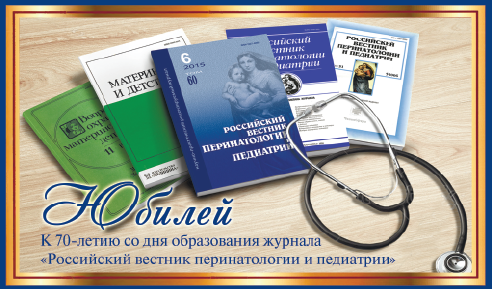
К 70-летию со дня образования журнала «Российский вестник перинатологии и педиатрии»
Уважаемые читатели нашего журнала, коллеги, друзья!
В 2026 году журнал «Российский вестник перинатологии и педиатрии» отмечает юбилей. Одному из старейших научных педиатрических изданий исполняется 70 лет! Это довольно внушительный возраст. Многие помнят первое название журнала – «Вопросы охраны материнства и детства». Именно с таким названием впервые в 1956 году появился журнал, главным направлением которого были медицинские аспекты в области охраны здоровья ребенка от внутриутробного развития до подросткового возраста. Впоследствии журнал был несколько раз переименован, менял внешний дизайн, но неизменным оставалось и по сей день остается приверженность издания - освещать самые актуальные вопросы педиатрической науки!
Поздравления с 70-летием журнала
| More Announcements... |